How to Sell Your House in Florida: Timeline, Costs, and Smart Steps
Selling a home in Florida involves more than putting a sign in the yard. Pricing, timing, inspections, insurance, and disclosure all affect how quickly you sell and how much you keep. This guide breaks down the process and the Florida-specific points to watch, so you can plan with confidence.
If you are also buying your next home, read our guide to buying a house in Florida to line up both sides of the move.
Step 1: Understand Your Numbers
Before you list, work out what you would net. Start with your estimated sale price, then subtract your mortgage payoff, agent compensation, seller closing costs, prorated taxes and association dues, and any repair credits you expect to give. Your broker can prepare a net sheet showing several scenarios. Our Florida closing costs guide explains the main seller-side charges, including documentary stamp tax on the deed.
Step 2: Price It Right
Pricing is the most important decision you will make. A home priced above what comparable properties are selling for tends to sit, collect price reductions, and sometimes sell for less than it would have if it had been priced correctly from the start. Your broker will analyze recent sales of similar homes, current active listings, local demand, and the condition of your property. Remember that buyers and their lenders rely on appraisals, which are tied to comparable sales, not asking prices.
Step 3: Prepare the Home
You do not need to renovate, but you do want to make a strong first impression. Focus on the items that deliver the best return:
- Declutter and deep clean. Buyers want to picture themselves living there.
- Handle visible repairs. Fix leaky faucets, damaged screens, peeling paint, and burnt-out bulbs.
- Boost curb appeal. Fresh mulch, trimmed landscaping, a clean driveway, and a painted front door make a difference.
- Address insurance issues. In Florida, roof age and older electrical or plumbing can block buyers from getting insurance. Knowing the issues early lets you fix them or price accordingly.
- Consider a pre-listing inspection. It can reveal problems before a buyer’s inspector does, avoiding surprises during the contract period.
Step 4: Know Your Disclosure Obligations
Florida sellers must disclose known facts that materially affect the value of the property and are not readily observable by the buyer. This rule comes from the Florida Supreme Court case Johnson v. Davis. Common disclosures include past water intrusion, roof leaks, termite damage, structural problems, and sinkhole claims. The standard Florida seller’s disclosure form helps organize these items, and homes built before 1978 require lead-based paint disclosures. When in doubt, disclose and let your broker or attorney guide you.
Step 5: Market the Property
Professional photos are a must, since most buyers begin online. Your broker will list the property on the MLS, which syndicates it to major real estate websites, and may add video, floor plans, or a virtual tour. Good descriptions highlight what matters to Florida buyers: updated roof, impact windows, newer HVAC, flood zone information, and low HOA fees, if applicable.
Step 6: Review Offers Carefully
The highest price is not always the best offer. Compare financing type, down payment, contingencies, inspection and appraisal terms, closing date, and any requested credits. A cash buyer with a clean contract may be preferable to a higher offer that depends on a shaky loan. If you have to sell fast, flexible closing dates and as-is terms may matter more than the last few thousand dollars. When a quick, certain sale matters most, some sellers also consider a direct cash buyer; FL Pro Homebuyers offers that option for sellers who want speed and simplicity.
Step 7: Navigate the Contract Period
Once you accept an offer, the buyer typically has an inspection period, usually 10 to 15 days, to evaluate the home and request repairs or credits. The lender orders an appraisal, and the title company confirms ownership and liens. If the appraisal comes in below the contract price, you may need to renegotiate, the buyer may bring more cash, or the deal may end. Respond promptly to requests, since deadlines in the Florida contract are strict.
Step 8: Close and Move On
At closing you sign the deed and settlement paperwork, and the title company pays off your mortgage, subtracts costs, and sends you the proceeds, often by wire the same day. Cancel utilities, hand over keys and openers, and leave the home clean and as agreed. If you claimed homestead, be sure to notify the county property appraiser if you will not be keeping the exemption on another home; see our homestead exemption guide.
How Long Does It Take to Sell a House in Florida?
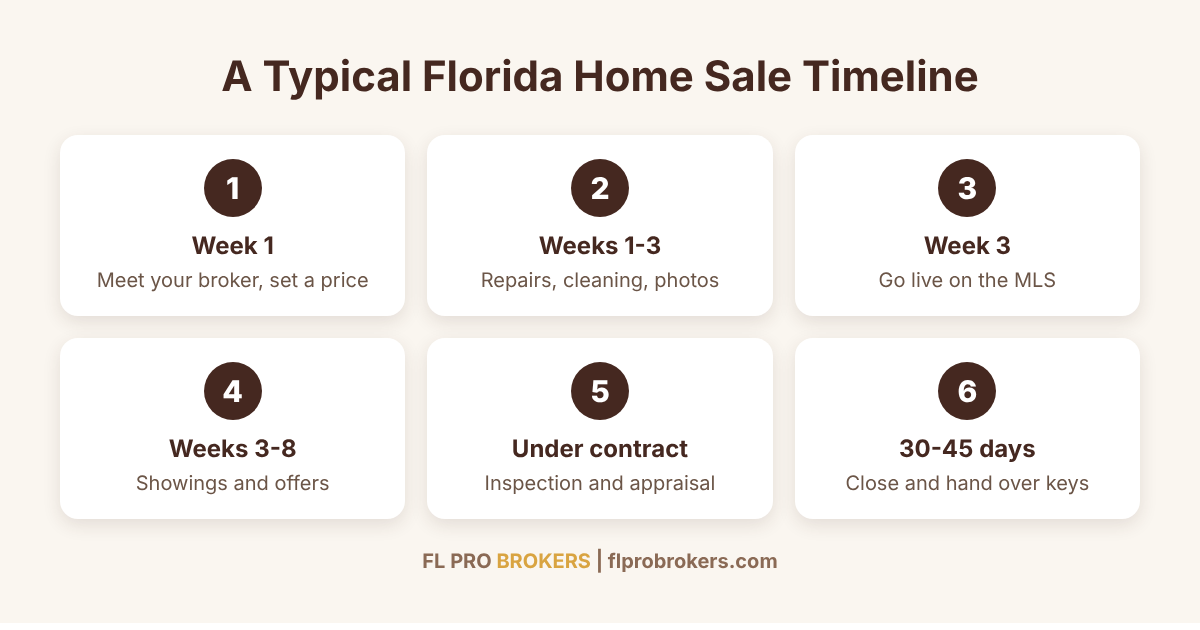
Timelines vary by price range, location, season, and condition, so there is no single answer. A common pattern is two to four weeks of preparation, a few weeks to several months on the market, and then 30 to 45 days from contract to closing for a financed buyer. Cash deals can close faster. Your broker can tell you how long comparable homes in your neighborhood have been taking to sell right now.
Tips to Net More From Your Sale
- Price competitively from day one rather than relying on reductions.
- Offer a clear inspection and repair strategy to avoid renegotiation.
- Gather documents in advance: surveys, warranties, permits, HOA documents, and utility averages.
- Be flexible on showings and closing date.
- Understand how market seasons and hurricane season may affect buyer activity in your area.
Special Situations: Inherited, Tenant-Occupied, or Distressed Homes
Not every sale looks the same. Inherited properties may need probate court approval before they can be sold, tenant-occupied homes require careful notice and cooperation for showings, and homes needing major repairs may sell best as-is to an investor or cash buyer. If you are facing one of these situations, talk with a broker and, where appropriate, an attorney early. The right strategy depends on your timeline, the condition of the property, and your financial goals, and a sound plan can protect your proceeds.
Frequently Asked Questions
Do I need a real estate agent to sell my home in Florida?
You can sell on your own, but a licensed broker brings pricing expertise, marketing, negotiation, and contract management. Mistakes in Florida contracts can be expensive, so weigh the savings against the risks.
Who pays closing costs when selling?
The seller typically pays doc stamps on the deed and agent compensation, as negotiated, plus payoffs and prorations. Other costs depend on the contract.
Can I sell my house as-is in Florida?
Yes. An as-is sale can still involve an inspection period, and you still must disclose known material defects.
Ready to Sell?
Talk to FL Pro Brokers for a pricing consultation and a customized plan for selling your Central Florida home.
This article is for general information and is not legal, tax, or financial advice. Consult a Florida real estate attorney or tax professional about your situation.