How to Buy a House in Florida: A Step-by-Step Guide
Florida is one of the most active housing markets in the country, and for good reason: no state income tax, year-round sunshine, and communities that range from walkable downtowns to quiet lakefront neighborhoods. But buying here comes with details you will not find in a generic homebuying checklist. Insurance, flood risk, roof age, and homeowners association rules can shape your monthly cost as much as the mortgage itself.
This guide walks through how to buy a house in Florida from start to finish, with the Florida-specific points to watch at each stage. If you would rather talk it through with a licensed broker, FL Pro Brokers helps buyers across Orlando, Central Florida, and Brevard County.
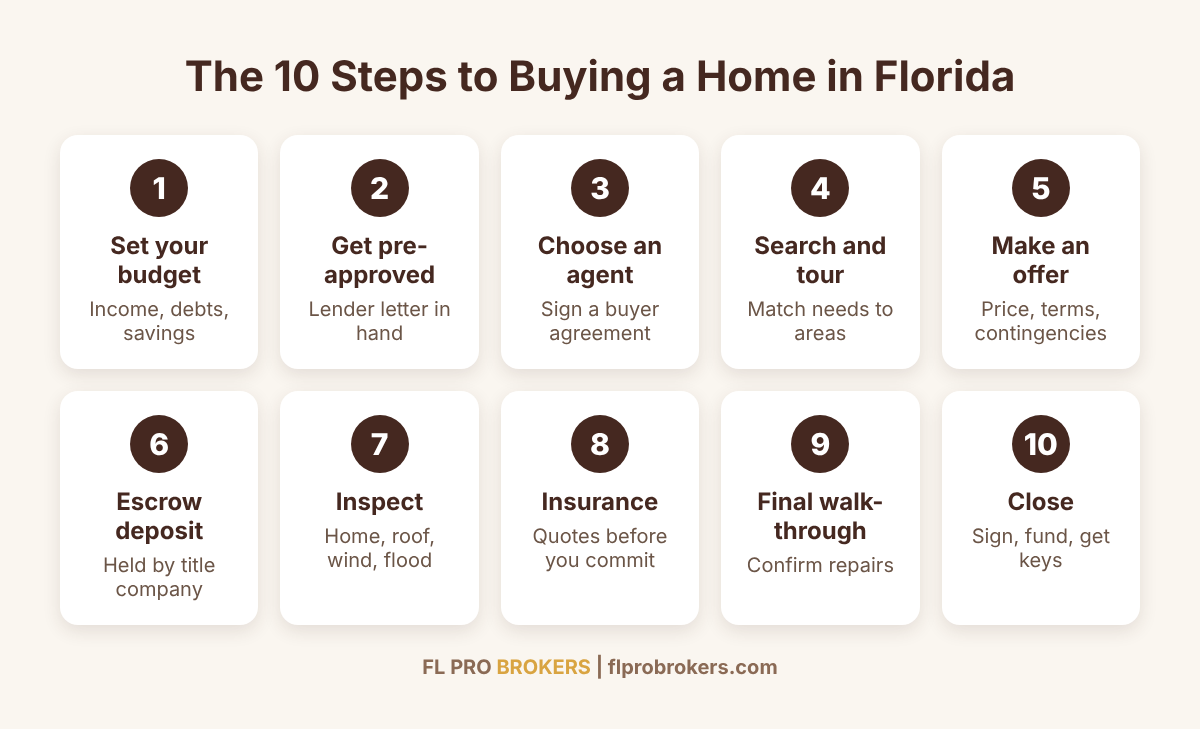
Step 1: Set a Realistic Budget
Start with what you can comfortably afford each month, not just what a lender will approve. In Florida, your monthly housing cost usually includes principal and interest, property taxes, homeowners insurance, possibly flood insurance, and HOA or condo fees. Insurance in particular has been one of the fastest-rising costs for Florida owners, so build in a cushion rather than relying on last year’s numbers.
Also plan for cash beyond the down payment: closing costs, inspections, moving expenses, and a reserve for repairs. Our guide to Florida closing costs breaks down what to expect.
Step 2: Get Pre-Approved for a Mortgage
A pre-approval letter from a lender tells sellers you are a serious buyer, and it tells you your real price range. Lenders will review your income, credit, debts, and assets. Compare at least two or three lenders, because rates and fees vary. If you are a first-time buyer, ask about state and local assistance as well; see our overview of Florida first-time home buyer programs.
Step 3: Choose a Buyer’s Agent
A good local agent knows which neighborhoods fit your lifestyle, how to read an insurance quote, and how to negotiate repairs. Since industry rule changes in 2024, buyers are generally asked to sign a written agreement with their agent before touring homes, spelling out services and compensation. Read it carefully and ask questions before you sign.
Step 4: Search, Tour, and Compare Neighborhoods
Make a short list of must-haves and nice-to-haves, then tour with those in mind. In Florida, location matters for more than commute time. Elevation, distance from the coast, and proximity to water influence flood risk and insurance cost. If you are weighing Central Florida options, our Orlando neighborhood guide is a good starting point.
When you tour, look past staging. Check for water stains on ceilings, signs of past leaks, the age and condition of the roof, the air conditioning system, and whether windows and doors look like they were built for hurricane conditions.
Step 5: Make an Offer
Your agent will help you decide on a price and terms using recent comparable sales. Florida purchases typically use the standard contracts published by the Florida Realtors and Florida Bar (often called FR/BAR), and the details matter: deposit amounts, the inspection period, financing and appraisal contingencies, and the closing date. Flexibility on timing can sometimes be worth as much as a higher price.
Step 6: Put Down the Escrow Deposit
After the contract is signed, your earnest money deposit goes to an escrow agent, usually a title company or attorney. The deposit is typically credited toward your costs at closing, but it can be at risk if you default without a contract right to cancel. Know your deadlines.
Step 7: Order Inspections
Do not skip the inspection period. A standard home inspection is the baseline, and Florida buyers often add several others:
- Roof inspection: roof age and condition are major factors for insurers.
- Wind mitigation inspection: documents features that can earn insurance discounts.
- 4-point inspection: often requested by insurers for older homes, covering the roof, electrical, plumbing, and HVAC.
- Termite and wood-destroying organism inspection: common in Florida’s climate.
- Sewer scope or septic inspection: especially for older homes or properties on septic systems.
Use the results to negotiate repairs, credits, or, if needed, to walk away within your contract’s inspection window.
Step 8: Line Up Insurance Early
Do not wait until the week of closing to ask about homeowners insurance. Request quotes while you are still in the inspection period so there are no surprises about price or availability. Ask about the hurricane deductible, which is usually a percentage of your dwelling coverage rather than a flat amount. For a deeper look, read our Florida homeowners insurance guide for buyers and our post on flood zones and flood insurance.
Step 9: Complete the Appraisal, Title Work, and Final Walk-Through
If you are financing, your lender will order an appraisal to confirm the home is worth the price. Meanwhile, the title company searches public records to make sure the seller can legally transfer the property and that liens are cleared. Shortly before closing, do a final walk-through to confirm agreed repairs were made and the home is in the condition you expect.
Step 10: Close and Get the Keys
At closing you will sign the loan documents and deed paperwork, pay your cash to close, and receive the keys. You will see your Closing Disclosure a few days beforehand; compare it to your original loan estimate and ask about anything that has changed. After closing, the deed is recorded with the county.
Florida Details Many Buyers Overlook
Homestead exemption. If the home will be your permanent residence, you may qualify for a property tax exemption and the annual assessment cap. The application deadline is typically March 1 of the year after you buy. Learn more in our homestead exemption guide.
HOA and condo rules. Review the governing documents, fees, rental restrictions, and any special assessments before you commit. If you are considering a condo, read what to know before buying a condo in Florida.
New construction. Builder contracts differ from resale contracts, so get your own agent involved early. We compare the two paths in new construction vs. resale in Florida.
Frequently Asked Questions
How much down payment do I need to buy a house in Florida?
It depends on the loan. Conventional loans can start as low as 3 percent down for qualified buyers, FHA loans allow 3.5 percent down with qualifying credit, and VA and USDA loans may allow zero down for eligible buyers and areas. A larger down payment generally lowers your monthly payment.
How long does it take to buy a house in Florida?
Once your offer is accepted, a financed purchase commonly closes in roughly 30 to 45 days. The house search itself can take weeks or months, depending on your criteria and the market.
Do I need a real estate attorney in Florida?
Florida does not require an attorney for a typical residential purchase, since title companies handle closings. Some buyers still choose one for complex situations. Ask your agent what is customary in your county.
Ready to Start Your Florida Home Search?
Buying a home is easier with a local guide. Contact FL Pro Brokers to talk with a licensed Florida broker about your goals, budget, and timeline.
This article is for general information and is not legal, tax, or financial advice. Programs, rates, and rules change; confirm details with your lender, attorney, or tax professional.