Florida Homeowners Insurance: What Home Buyers Need to Know
For many Florida buyers, homeowners insurance is the biggest surprise in the budget. Premiums have risen sharply in recent years, some insurers have left the market or tightened underwriting, and policies often come with conditions that buyers in other states rarely see. The good news is that a prepared buyer can avoid most surprises by understanding what drives price and by asking the right questions before closing.
This guide explains how Florida homeowners insurance works and what to do while you are under contract. For the full buying process, see how to buy a house in Florida.
What a Standard Florida Policy Covers
A typical homeowners policy (often an HO-3) covers the dwelling, other structures such as a fence or detached garage, personal property, loss of use if you cannot live in the home after a covered loss, and personal liability. Wind damage from hurricanes is generally included, but it usually carries its own deductible. Flood damage is not covered by a standard policy, which is why many buyers need a separate flood policy. Read more in our guide to Florida flood zones and flood insurance.
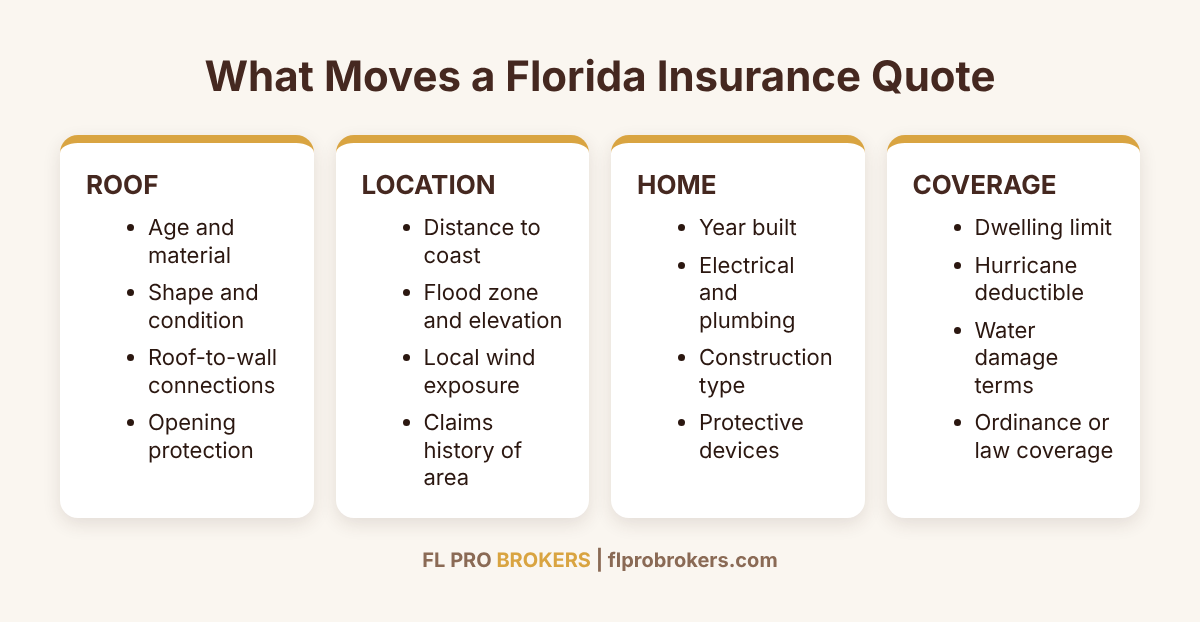
What Drives Your Premium
Roof age and condition
The roof is often the single biggest factor. Many insurers limit coverage, increase pricing, or decline homes with older roofs, and the cutoffs vary by company and roof material. If a roof is near the end of its life, factor replacement into your offer or negotiate a credit. A new roof can open up more insurer options and lower your quote.
Age and systems of the home
Older homes may need updated wiring, plumbing, and air conditioning to be insurable. Some insurers ask for a 4-point inspection that reviews the roof, electrical, plumbing, and HVAC. Certain older components, such as aluminum wiring or galvanized plumbing, can be red flags.
Construction and building code
Homes built under newer versions of the Florida Building Code, which strengthened wind requirements over time, can qualify for better pricing. Concrete block construction, impact windows or shutters, and a hip roof shape can all help.
Location
Distance from the coast, local claims history, and flood exposure influence rates. Two similar homes in different parts of the same county can have very different quotes.
Understanding the Hurricane Deductible
Most Florida policies include a separate hurricane deductible, usually a percentage of your dwelling coverage, commonly 2, 5, or 10 percent, rather than a flat dollar amount. On a home insured for $350,000, a 2 percent deductible is $7,000 and a 5 percent deductible is $17,500. A higher deductible can lower your premium, but make sure you could afford it after a storm. Ask whether the deductible applies per storm or per season and when it takes effect.
Wind Mitigation Inspections
A wind mitigation inspection documents features that make a home more resistant to wind, such as roof shape, roof deck attachment, roof-to-wall connections, and window protection. Florida law requires insurers to offer discounts for verified mitigation features, and the inspection report is submitted to your insurer. In many cases the savings can exceed the inspection fee, so ask for one during your inspection period. The state also runs a home-hardening grant program through My Safe Florida Home for eligible owners; availability and funding change, so check the program’s current status.
Citizens and the Private Market
Citizens Property Insurance Corporation is Florida’s state-backed insurer of last resort. It exists to cover homeowners who cannot find coverage in the private market, and policies are subject to eligibility rules and pricing guidelines. Private insurers, including Florida-based carriers, often offer more flexibility if your roof and home qualify. An independent insurance agent can compare multiple carriers at once and explain trade-offs.
How to Shop for Insurance While Under Contract
- Start early. Ask your agent for an insurance agent referral as soon as you are under contract, so quotes are in hand before your inspection period ends.
- Share the property details. Provide the address, roof age, year built, and any inspection reports.
- Ask for the previous owner’s claims history. A CLUE report can show prior claims at the address, and the seller may be able to share their policy or recent premium.
- Compare more than price. Review the hurricane deductible, water damage limits, roof coverage terms, and claims-handling reputation.
- Bind the policy before closing. Your lender will require proof of insurance, and you want coverage effective on closing day.
Smart Ways to Lower Your Costs
- Get a wind mitigation inspection and submit it to your insurer.
- Upgrade roof, windows, doors, or garage door if budget allows.
- Bundle policies where it makes financial sense, and compare quotes again at renewal.
- Raise your deductible only to a level you can comfortably cover.
- Maintain the home, since insurers look closely at roof and plumbing condition.
What to Do After a Storm
Know your claim process before you need it. Keep your policy documents accessible, photograph and video your home and belongings now, and store copies in the cloud. After a storm, take photos of damage before making temporary repairs, keep receipts for emergency repairs such as tarps or water removal, and report the claim promptly. Florida law sets deadlines for filing claims after a hurricane, so check your policy and the state’s current rules. Having a good insurance agent and documentation ready can make the process far smoother.
Frequently Asked Questions
Is homeowners insurance required in Florida?
State law does not require it for homeowners without a mortgage, but lenders require it. Even without a loan, going uninsured in hurricane country is a serious financial risk.
Does insurance cover hurricane flooding?
Standard policies cover wind damage but typically exclude flood, including storm surge. A separate flood policy is needed, and many have a waiting period before coverage starts.
Can a seller transfer their insurance policy to me?
Generally not. You will usually need to buy a new policy, though the seller’s policy details can help you gauge what to expect.
Buy With Eyes Open
Insurance cost should be part of every offer decision. Contact FL Pro Brokers to talk through the homes on your list and what to ask before you commit.
This article is for general information and is not insurance, legal, or financial advice. Programs, deductibles, and regulations change; confirm details with a licensed Florida insurance agent.