Florida Flood Zones and Flood Insurance: What Buyers Should Know
Florida is surrounded by water, laced with lakes and canals, and prone to heavy rain, so flood risk is part of nearly every home purchase. Flood is also the gap many buyers do not discover until it is too late: standard homeowners insurance does not cover it. Understanding flood zones before you make an offer can protect both your budget and your home.
This guide explains how Florida flood zones work, when flood insurance is required, and what to do while under contract. For the broader process, see how to buy a house in Florida.
What Are FEMA Flood Zones?
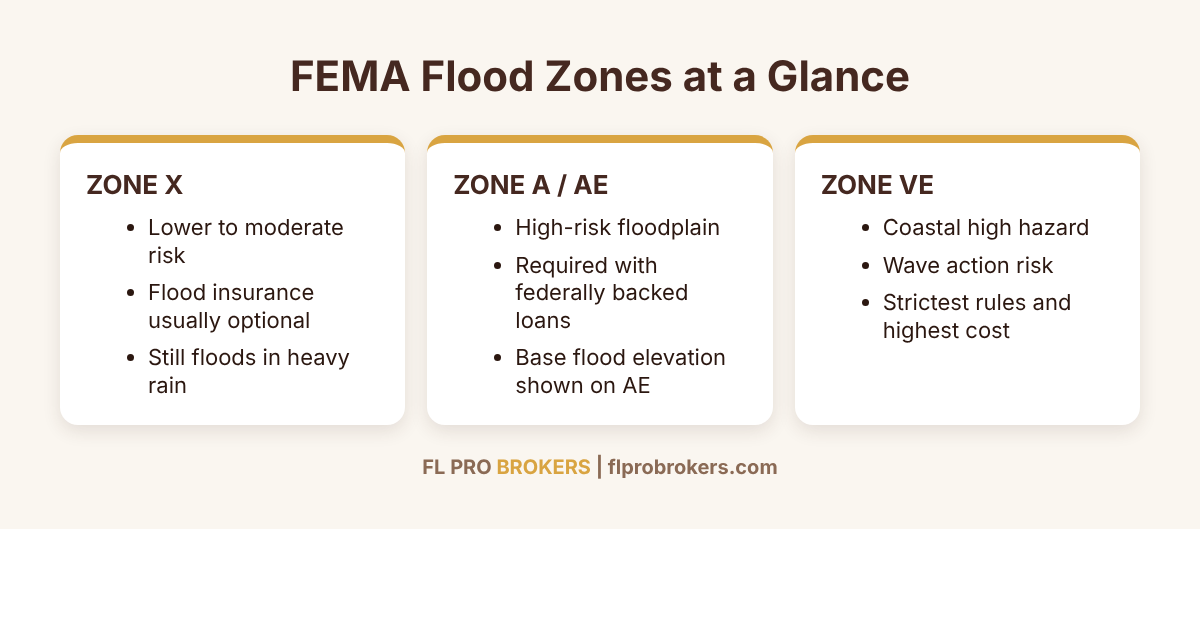
The Federal Emergency Management Agency maps areas by flood risk on Flood Insurance Rate Maps. Each property falls into a zone that indicates its risk. The zones most buyers encounter include:
- Zone X: areas of lower or moderate flood risk. Flood insurance is typically not required by lenders, but it is still wise to consider.
- Zone A and AE: special flood hazard areas with a high risk, defined as at least a 1 percent annual chance of flooding. AE zones show a base flood elevation.
- Zone VE: coastal high-hazard areas that also face wave action.
A 1 percent annual chance is sometimes called a 100-year flood, but the name is misleading. Over a typical 30-year mortgage, a property in a high-risk zone has a meaningful chance of flooding, roughly one in four. And a large share of flood claims come from properties outside high-risk zones.
When Is Flood Insurance Required?
If your home is in a special flood hazard area and you finance with a federally regulated or federally backed lender, flood insurance is generally required for the life of the loan. Cash buyers are not required to buy it, but skipping it is a gamble. Some lenders also require flood coverage outside high-risk zones, and any buyer can choose to purchase it.
Where to Look Up a Property’s Flood Zone
You can search an address on FEMA’s Flood Map Service Center. Your county or city floodplain office can also provide information, and your agent or lender can pull a flood determination. Because maps are updated periodically, confirm that you are looking at the current version, and ask about any pending map changes. Many listings also show flood data, but treat it as a starting point, not the final word.
Elevation Certificates Can Save Money
An elevation certificate is a document prepared by a surveyor or engineer that records a building’s elevation relative to the base flood elevation. Insurers can use it to rate your policy more precisely, and it can lower premiums when the home sits above the flood level. Ask the seller whether one exists. If not, you can order one during your inspection period.
How Flood Insurance Is Priced
The National Flood Insurance Program, administered by FEMA, uses a pricing method called Risk Rating 2.0 that considers factors beyond the flood zone, such as distance to water, the cost to rebuild, elevation, and the type of building. Private flood insurers also operate in Florida, sometimes with lower prices or higher limits, so get quotes from both. A premium on one home can differ widely from the neighbor down the road, so request a quote for the specific address before making an offer.
The NFIP’s standard residential coverage has limits for the building and for contents, so consider whether a higher limit or an excess policy makes sense if your home is worth more than the program maximums.
Waiting Periods and Timing
NFIP policies typically have a 30-day waiting period before coverage takes effect, with an exception when flood insurance is purchased in connection with a loan closing. Private policies have their own waiting periods. The practical lesson: do not wait until a storm is in the forecast. Buy early, ideally while under contract.
Flood Risk Beyond the Map
Maps are useful but not complete. In Florida, heavy rainfall can flood areas that FEMA does not designate as high-risk, especially in low-lying neighborhoods or places with limited drainage. During showings, look for signs of past water intrusion:
- Staining on lower walls or garage walls, or a fresh paint line.
- Musty smells, warped baseboards, or new flooring in only part of the home.
- Landscaping that slopes toward the house.
- Nearby retention ponds or canals that could rise during storms.
Ask the seller whether the home has ever flooded or had a flood claim. Florida sellers have a duty to disclose known material facts that affect value, and flood history is a common topic.
Smart Steps for Florida Buyers
- Check the zone before you tour. Use your agent or FEMA’s map tool to pull the flood zone for each home on your shortlist.
- Request quotes under contract. Get flood quotes along with homeowners insurance, since the combined cost shapes your monthly budget. See our homeowners insurance guide.
- Ask for an elevation certificate. It may reduce your premium and reveals how the home sits relative to flood levels.
- Use your inspection period. If flood insurance turns out to be unaffordable or unavailable, you may need the right to cancel.
- Consider the whole home. Lower-level living areas, utilities, and HVAC placement all influence flood damage costs.
Preparing Your Home Once You Own It
Flood preparedness does not end at closing. Keep valuable items and important documents above ground level, know your evacuation zone and route, and understand what your policy covers. Consider flood vents, backflow valves, and landscaping that directs water away from the home. Review your coverage every year, since values, rates, and your own property can change. Taking these steps gives you better protection and may also make your home easier to insure and sell later.
Frequently Asked Questions
Does homeowners insurance cover flood damage in Florida?
No. Standard homeowners insurance generally excludes flood. You need a separate flood policy through the NFIP or a private insurer.
How much does flood insurance cost in Florida?
It varies widely by property, from a few hundred dollars a year in lower-risk areas to several thousand in high-risk zones. Get a quote for the exact address.
Is flood insurance transferable when I buy a home?
NFIP policies can sometimes be assigned to the buyer of the property, which may preserve a favorable rate or coverage history. Ask your insurance agent whether it applies.
Know the Risk Before You Buy
If you are comparing homes in different parts of Central Florida, FL Pro Brokers can help you evaluate flood risk, insurance cost, and long-term value together.
This article is for general information and is not insurance, legal, or financial advice. Flood maps, rates, and program rules change; confirm details with a licensed insurance agent.