Florida First-Time Home Buyer Programs: Grants, Loans, and Down Payment Help
Saving for a down payment is the biggest hurdle for many first-time buyers, but Florida has more help available than most people realize. State housing finance programs, federal loans, and local city and county initiatives can reduce the cash needed to get started. Eligibility rules, income limits, and funding change often, so use this guide as a map and confirm current details with a lender.
If you are just starting out, pair this article with our step-by-step guide on how to buy a house in Florida.
What Counts as a First-Time Buyer?
Many programs define a first-time buyer as someone who has not owned a primary residence in the last three years, which means some people who owned a home in the past still qualify. Certain programs waive the first-time requirement for veterans or for homes in targeted areas. Each program sets its own definition, so ask.
Florida Housing Finance Corporation Programs
Florida Housing Finance Corporation is the state’s housing finance agency, and it works with participating lenders to offer first mortgage loans paired with down payment assistance. Programs and funding amounts change, but the options have included:
- Florida Assist and similar second-mortgage programs: down payment and closing cost help provided as a low-interest or deferred loan, often with requirements around income and purchase price limits.
- Hometown Heroes Housing Program: aimed at eligible essential workers such as teachers, healthcare workers, first responders, military, law enforcement, and childcare employees. It has offered assistance equal to a percentage of the first mortgage up to a set maximum, which has been in the tens of thousands of dollars.
- HFA Preferred and similar loan products: first mortgages with reduced mortgage insurance and flexible underwriting for eligible households.
These programs generally require a minimum credit score, completion of a homebuyer education course, and use of a participating lender. Funding can run out, so ask a lender about current availability before you rely on any program.
Federal Loan Options
FHA loans
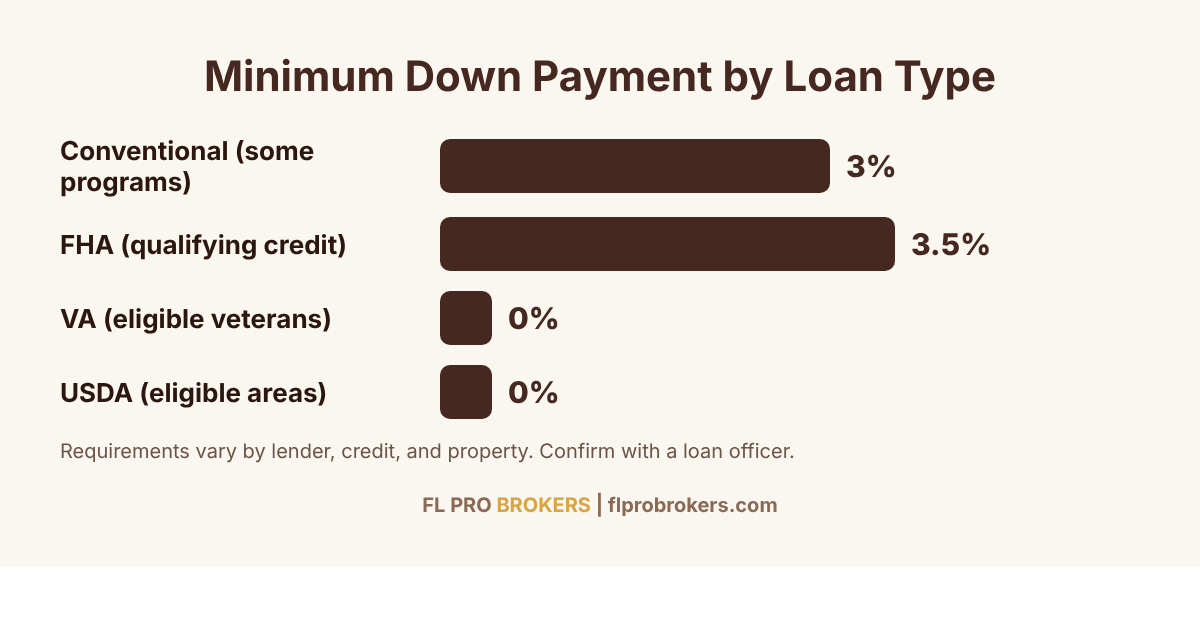
FHA loans are insured by the Federal Housing Administration and allow lower down payments, as little as 3.5 percent for borrowers who meet credit requirements. They require mortgage insurance premiums, and the property must meet minimum condition standards. FHA loan limits vary by county.
VA loans
Eligible veterans, service members, and some surviving spouses can use VA loans, which often require no down payment and no monthly mortgage insurance. A VA funding fee usually applies unless exempt. Florida has a large military community, so VA loans are a major source of financing.
USDA loans
USDA loans can offer zero down payment for eligible buyers in eligible rural and suburban areas, subject to income limits. Many places outside the cores of Florida’s metro areas qualify, so check the property eligibility map.
Conventional low down payment loans
Conventional programs backed by Fannie Mae and Freddie Mac allow down payments as low as 3 percent for qualified first-time buyers. Private mortgage insurance usually applies until you build enough equity.
Local City and County Assistance
Many Florida counties and cities run their own down payment assistance through housing departments, often funded by state and federal housing programs. Orange, Seminole, Osceola, and Brevard counties and their larger cities have offered assistance in the past, with income limits and application windows. Search your county’s housing department site or ask a participating lender what is currently open.
How Much Do You Need to Qualify?
Lenders look at your credit score, debt-to-income ratio, employment history, and the cash you have for down payment, closing costs, and reserves. A stronger credit profile generally lowers your interest rate and mortgage insurance cost. Before you apply, pull your credit reports, pay down high-interest balances if possible, and avoid opening new accounts or making large purchases during the process.
Common Mistakes First-Time Buyers Make
- Shopping before getting pre-approved. You may fall for a home outside your range or lose an offer to a stronger buyer.
- Forgetting closing costs and reserves. Down payment is only part of the cash you need. See our Florida closing costs guide.
- Ignoring insurance and taxes. Ask for homeowners and flood quotes early; see our insurance guide.
- Skipping the homebuyer course. Many assistance programs require it, and it can unlock better terms.
- Changing jobs or taking new debt before closing. Lenders re-verify your finances late in the process.
- Missing the homestead filing. Once you move in, apply for the homestead exemption to reduce property taxes.
A Simple Game Plan
- Check your credit and set a monthly payment budget.
- Talk to a lender who works with Florida assistance programs.
- Complete a homebuyer education course if needed.
- Get pre-approved and ask which programs fit your income and target price range.
- Work with an agent who understands program rules, since some limit purchase price or property type.
What Happens After You Get Approved
Approval is only the beginning. Once you find a home, your lender will verify that it fits program rules, such as price limits, property type, and condition standards. Expect an appraisal, an inspection, and possibly additional paperwork for the assistance program. Keep your finances steady, respond quickly to document requests, and communicate with your agent and loan officer about deadlines. Some assistance programs have strict timelines for reserving funds, so a prepared buyer who moves quickly has a real advantage over one who is scrambling.
Frequently Asked Questions
Is down payment assistance free money?
Some is offered as a grant, but much of it is structured as a second mortgage that is deferred, forgivable over time, or repaid at sale or refinance. Read the terms.
What credit score do I need?
It depends on the program and lender. Many assistance programs require scores in the mid-600s or higher, while FHA can allow lower scores with higher down payments. Ask your lender about your specific situation.
Can I use assistance for a condo?
Often yes, but the building typically must meet lender or program requirements. Read what to know before buying a Florida condo.
Take the First Step
You do not have to figure this out alone. Contact FL Pro Brokers to talk about your goals and get pointed to lenders and programs that fit.
This article is for general information and is not legal or financial advice. Program details and funding change frequently; confirm current terms with a participating lender or the program administrator.