Florida Home Inspection Guide: What to Check Before You Buy
A home inspection is one of the most important steps when buying in Florida. The climate, storms, and building styles here mean certain systems deserve extra attention. This guide explains which inspections buyers commonly order and how to use the findings.
The General Home Inspection
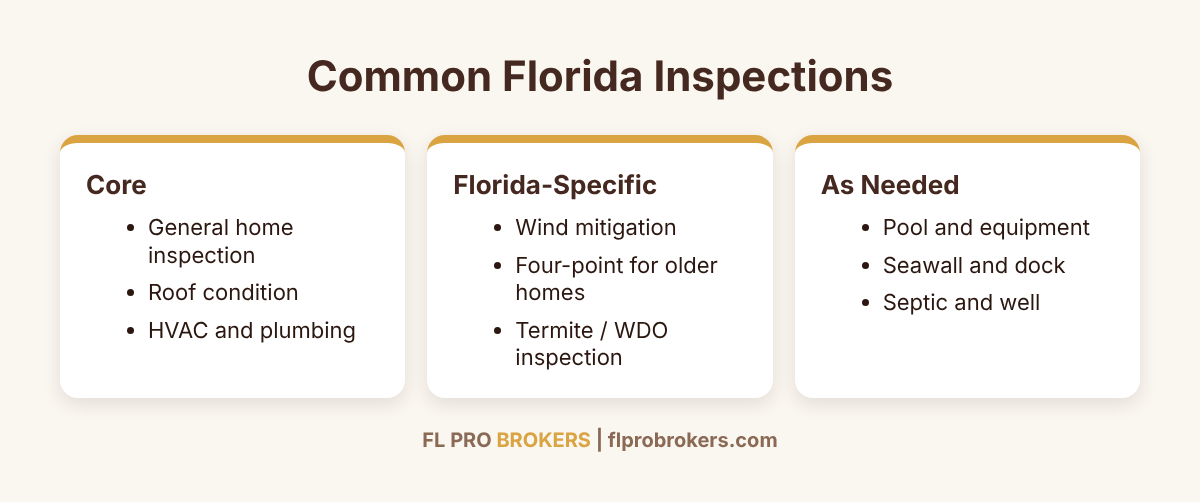
A licensed inspector reviews the home’s visible structure and major systems, including the roof, exterior, windows, electrical, plumbing, HVAC, and attic. The report documents condition and flags repairs or safety concerns. It is not a guarantee, but it gives you a clearer picture before you are committed.
Roof Condition
Roof age and condition influence both safety and insurance. Ask for the roof’s age, permit history, and any repair records. Some insurers have restrictions on older roofs, so confirm coverage before your inspection period ends. Review our homeowners insurance guide for related tips.
Wind Mitigation Inspection
A wind mitigation inspection documents features such as roof shape, roof-to-wall connections, opening protection, and roof deck attachment. In Florida, insurers may offer discounts based on these features, so the report can help lower your premium.
Four-Point Inspection
Insurers often request a four-point inspection for older homes. It focuses on the roof, electrical, plumbing, and HVAC systems and helps the insurer assess risk. Ask your insurance agent whether one is required.
Termite and Wood-Destroying Organism Inspection
Florida’s warm climate makes termites and other wood-destroying organisms a real concern. A WDO inspection looks for active infestations and past damage. Findings can be negotiated with the seller.
Flood, Water, and Drainage
Check the home’s flood zone and look for signs of past water intrusion such as staining, musty odors, or uneven flooring. After heavy rain, observe how water drains around the property.
Optional and Property-Specific Inspections
- Pool and equipment if the property has a pool or spa.
- Seawall and dock for waterfront homes, where repairs can be costly.
- Septic or well for properties not on municipal services.
- Sewer line scope for older homes.
Using the Results in Negotiation
After the inspection, your agent can help you decide whether to request repairs, a credit, a price adjustment, or to walk away within your contract’s inspection period. Focus on safety, structural, and costly system issues rather than minor cosmetic items. See the full Florida home buying process to understand how inspection timing fits in, and review closing costs so you can budget for inspection fees.
How to Prepare for Inspection Day
You do not have to attend every inspection, but being there for the general inspection is valuable. You will see issues in person, ask questions, and learn how to maintain systems such as the HVAC and water heater. Bring your agent if you can, and ask the inspector to point out the location of shutoff valves, the electrical panel, and the age of major systems. Request that the seller provide access to the attic, crawl spaces, and utility areas.
Red Flags That Deserve a Closer Look
- Roof damage or age. Missing shingles, soft spots, or widespread granule loss can mean a replacement is near.
- Signs of moisture. Stains on ceilings, musty smells, and soft drywall may point to leaks or past water intrusion.
- Older electrical panels. Certain older panel brands and aluminum wiring are known concerns and can affect insurability. Ask an electrician to evaluate if the inspector flags them.
- Older plumbing materials. Some older homes have plumbing that is prone to failure, so ask the inspector what type is installed and how it is holding up.
- HVAC condition. Air conditioning is essential in Florida; ask about age, service records, and drainage lines.
- Foundation or structural cracks. Hairline cracks are common, but large or widening cracks deserve a structural opinion.
Mold, Humidity, and Air Conditioning
Florida’s humidity makes moisture control important. A good inspector will check for signs of excess moisture around windows, under sinks, in attics, and around the air handler. If you see or smell possible mold, you can ask for a separate mold assessment. Make sure the air conditioning system cools evenly and that condensation lines are draining properly.
What Inspections Usually Do Not Cover
A general inspection is a visual evaluation of accessible areas on a given day. It does not typically cover hidden defects behind walls, the interior of sealed systems, or environmental issues unless you hire a specialist. It also does not predict future repairs. Read the inspection agreement so you know the scope and limitations, and ask for specialist evaluations when something looks serious.
Turning the Report Into a Plan
Sort the report into three groups: safety or structural issues, major system repairs, and routine maintenance. Get quotes for the larger items so you can negotiate with real numbers. Share the report with your insurance agent and lender if they request it. If major issues appear, you may have the right to cancel within your inspection period, so make decisions before the deadline. Your agent can explain your options based on your contract. See also our comparison of new construction and resale homes, since even new builds should be inspected.
Frequently Asked Questions
How long is the inspection period in Florida?
It is set in your purchase contract and commonly lasts about 10 to 15 days, but terms vary. Confirm your contract’s exact deadline with your agent.
Who pays for the inspection?
The buyer typically pays for inspections they order. Fees depend on the property and type of inspection.
Can I negotiate after the inspection?
Yes. Buyers commonly request repairs, credits, or price adjustments based on the findings, within the contract’s inspection period.
Get Help Navigating Your Inspection
Contact FL Pro Brokers and we will walk you through the inspection process and next steps.
This article is for general information and is not legal, tax, or financial advice. Market conditions, taxes, and insurance costs change; confirm current figures with licensed professionals.