New Construction vs. Resale Homes in Florida: Which Is Right for You?
Florida buyers often face a choice between buying a brand-new home from a builder or a previously owned home. Each path offers real advantages, and the best option depends on your timeline, budget, and tolerance for surprises. This guide compares new construction and resale homes across the factors that matter most in Florida: cost, insurance, inspections, fees, and contract differences.
For the full buying roadmap, start with how to buy a house in Florida.
The Case for New Construction
Modern building codes and lower maintenance
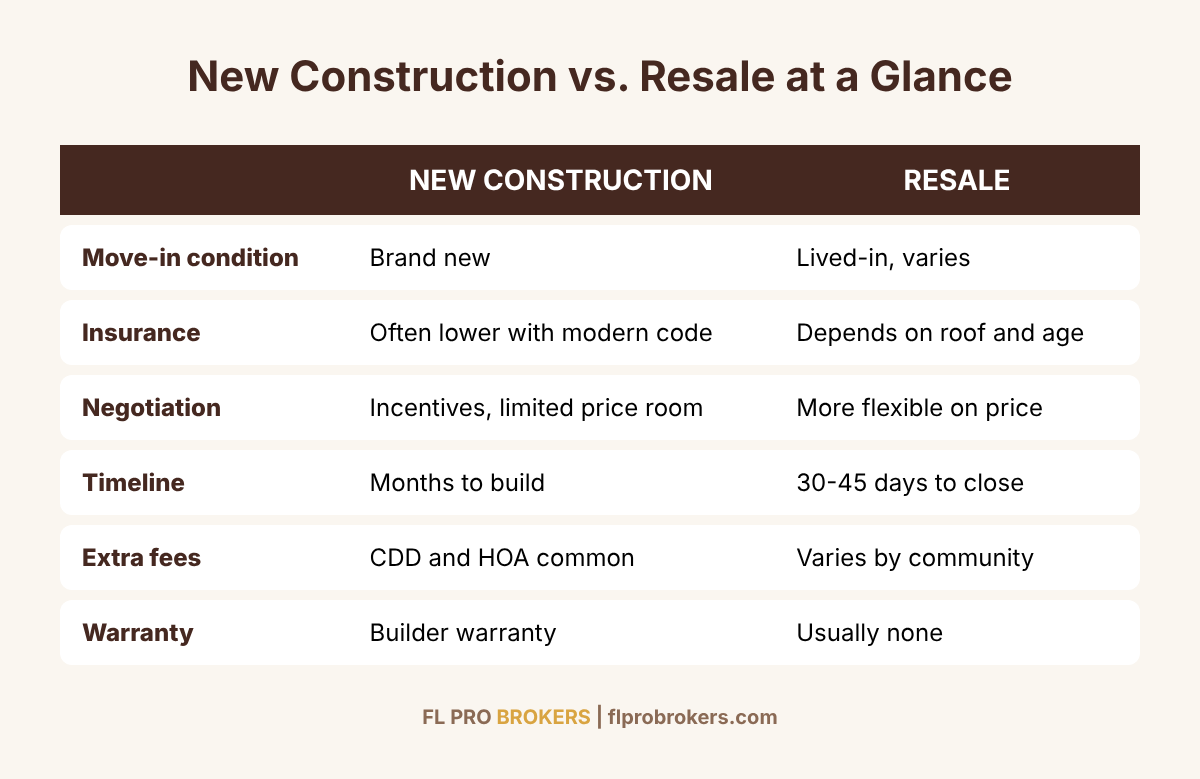
Florida’s building code has been strengthened over time, particularly for wind resistance after hurricanes in the 1990s and 2000s. A recently built home typically includes stronger roof attachments, impact-rated windows or shutters, and updated electrical and plumbing. New roofs and systems also mean fewer near-term repair bills and less risk of an insurance problem tied to age.
Potentially lower insurance cost
Because insurers look closely at roof age, construction type, and wind features, newer homes can often qualify for better pricing than older ones, though this varies by company and location. A wind mitigation inspection can document discounts. See our insurance guide for how premiums are calculated.
Customization and builder incentives
Buying early in construction can let you choose finishes, layouts, and options. Builders also frequently offer incentives such as mortgage rate buydowns, closing cost help, or upgrade credits, especially when they are trying to move inventory. These incentives can be valuable, but read the fine print: some require using the builder’s preferred lender, and the base price may be higher than comparable resale homes.
Warranty
Most builders provide a warranty covering workmanship, systems, and structural components for varying periods. Coverage and claim procedures differ, so get the warranty in writing and understand what it excludes.
The Case for Resale Homes
Established neighborhoods and mature landscaping
Resale homes often sit in established communities with shade trees, finished infrastructure, and a track record of how the neighborhood has aged. You can see the area as it is, not as a rendering, and often with a shorter commute to established job centers.
More room to negotiate
While builders set pricing carefully, sellers of resale homes may negotiate on price, repairs, and closing costs. If a resale home needs work, you may be able to negotiate a credit and update it to your taste.
Speed and certainty
A resale home can usually close in 30 to 45 days, and you will not be waiting through construction timelines that can shift because of weather, permits, labor, or supply issues. If you need a home quickly, resale may be the better fit.
Typically lower price per square foot
Depending on the area, older homes can offer more space for the money, though you may spend on updates. Compare the total cost of ownership, not just the purchase price.
Costs and Fees Unique to New Construction
New communities frequently include a Community Development District, or CDD, a special taxing district that finances roads, drainage, and amenities. CDD assessments appear on your property tax bill in addition to normal taxes, sometimes for decades. Ask for the annual amount and the remaining term, and add it to your monthly budget. HOA fees are also common and may rise as the community builds out. Our post on the homestead exemption explains how taxes are assessed after you buy.
Also budget for items that are not always included: window blinds, fencing, landscaping upgrades, appliances, a pool, and garage storage. Upgrades chosen during construction can add up quickly.
Contracts and Representation
Builder contracts are written to protect the builder. They may have longer or less flexible timelines, limited remedies if the completion date slips, and arbitration clauses. Have an attorney review the contract if you can, and bring your own agent. Many builders require that your agent be registered on your first visit, so do not walk into a sales center alone if you want representation. A buyer’s agent usually costs the buyer nothing extra on new construction, since builders often budget for cooperating brokers, but confirm this and any agreement requirements.
Do You Still Need an Inspection on a New Home?
Yes. New homes are built under tight schedules and many subcontractors, and defects happen. Consider a pre-drywall inspection to see framing and wiring, and a final inspection before closing. Create a punch list of issues for the builder to fix before you accept the home, and keep records of all communication. A warranty inspection near the end of the first year can catch issues while coverage still applies.
Financing Differences
Lenders may offer different programs or timelines for construction loans or builder-affiliated lenders. A rate lock for a home that will not be finished for months can be tricky, so ask about extended locks and costs. If you are using down payment assistance or a government loan, make sure the builder’s home and community qualify. See our first-time buyer programs overview.
How to Decide
- Start with your timeline. Need to move in a month or two? Resale or a quick move-in home from a builder is likely best.
- Compare monthly cost, not price. Add taxes, CDD, HOA, insurance, and flood coverage for each option.
- Weigh maintenance tolerance. If you want fewer projects, new may fit. If you enjoy updating a home, resale can offer value.
- Look at location. Convenience, schools, and community character may outweigh the home itself.
- Review risk. Check flood zones and elevation for either type of home.
A Note on Timing and Market Conditions
Builder incentives and resale negotiating power shift with market conditions. When inventory is high, builders may offer larger incentives and resale sellers may be more flexible. When inventory is tight, competition increases and negotiating room narrows. Ask your agent what is happening in your target neighborhoods right now, how many quick move-in homes are available, and how recent comparable sales compare to builder prices. This context will help you decide when and how to make your offer.
Frequently Asked Questions
Is it cheaper to buy new or resale in Florida?
It depends on the community and incentives. New homes may have higher base prices but lower near-term maintenance and insurance costs, while resale homes may have lower prices but higher repair needs. Compare total monthly cost.
Can I negotiate with a builder?
Often more on incentives and upgrades than on base price. Ask what is available and how it compares to a price reduction.
What is a spec home?
A spec home is built by the builder before a buyer is chosen. It can often close sooner than a to-be-built home, which can help with timing and rate locks.
Talk Through Your Options
Whether you choose new or resale, representation helps. Contact FL Pro Brokers to explore homes in Orlando, Lake Nona, and across Central Florida.
This article is for general information and is not legal, tax, or financial advice. Builder policies, warranties, and incentives vary; read your contract and consult professionals as needed.