
Buying a Condo in Florida: A Buyer’s Checklist
A Florida condo can be a smart way to enjoy the lifestyle: low-maintenance living, shared amenities, and sometimes a prime location near the beach, downtown, or the theme parks. But condo ownership comes with shared responsibilities and financial obligations that single-family buyers do not face. Since the 2021 Surfside building collapse, Florida has also strengthened laws around building safety and reserves, which changes how buyers should evaluate a building.
This guide gives you a practical checklist for buying a condo in Florida. For the full process, see how to buy a house in Florida; most steps apply to condos with a few extra twists.
Understand What You Actually Own
When you buy a condo, you own the unit and a share of the common elements, such as the roof, structure, hallways, pool, and grounds. The condominium association manages and maintains those shared areas using money collected from owners. That means the health of the association matters as much as the unit itself.
Read the Condo Documents Carefully
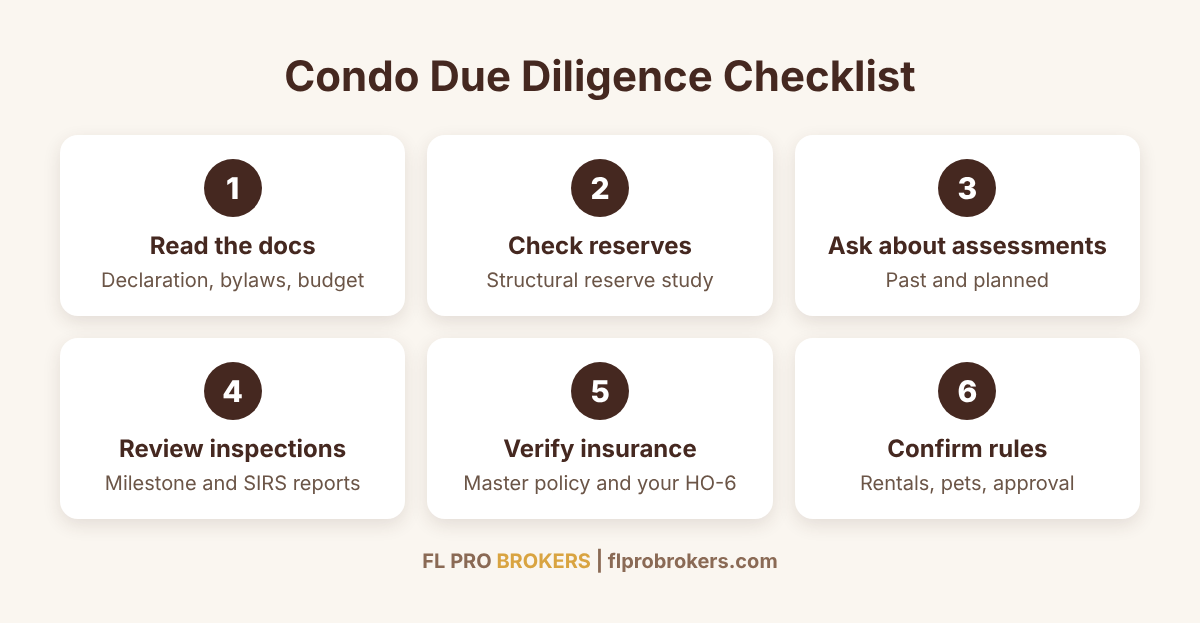
Florida gives condo buyers a right to review key documents and, for resales, a short window to cancel the contract after receiving them. The package typically includes the declaration of condominium, bylaws, rules and regulations, the current budget, recent financial statements, and meeting minutes. Do not skim them. Look for:
- The monthly or quarterly fee and what it covers (water, trash, insurance, cable, internet, pest control).
- Rules about pets, parking, and unit modifications.
- Rental restrictions, such as minimum lease terms or caps on the percentage of rentals.
- Whether the association must approve new buyers.
- Pending lawsuits or major projects.
Check Reserves and Structural Safety
Florida law now requires many condo buildings of three stories or more to complete a structural integrity reserve study, often called an SIRS, that identifies major components such as the roof, structure, fireproofing, plumbing, electrical, waterproofing, windows, and the cost and timing of their replacement. Associations are generally required to fund those reserves rather than waiving them, though the rules continue to evolve and have been amended by recent legislation.
Buildings that reach a certain age are also subject to milestone inspections, which review structural condition. The trigger age depends on the building’s location and local rules, and it has been about 30 years in general, with earlier inspections for buildings close to the coast. Ask whether the building has completed any required milestone inspection or SIRS and request copies. A building with underfunded reserves or deferred repairs may face large special assessments or fee increases.
Ask About Special Assessments
A special assessment is a one-time charge to owners, levied when the association needs money beyond reserves. They can be five figures or more per unit in older buildings. Ask the seller and the association about assessments that are currently in effect, planned, or likely after a roof, concrete restoration, or elevator project. Find out who is responsible for assessments that are billed before closing but payable afterward; the contract should say.
Verify Insurance Coverage
The association carries a master policy on the building and common areas. As an owner, you generally need your own condo policy, often called HO-6, to cover your unit’s interior, belongings, personal liability, and your share of any assessments related to a covered loss. Ask to see the master policy’s deductible, particularly the windstorm deductible, since owners can be charged their share of a large deductible after a hurricane. Review our Florida homeowners insurance guide and flood insurance overview, since coastal condos often need both.
Financing a Condo
Lenders review the building as well as the buyer. Many follow Fannie Mae, Freddie Mac, FHA, or VA guidelines that look at owner-occupancy rates, delinquent dues, reserve funding, litigation, and building condition. A building that does not meet those standards may not qualify for low down payment loans, which can reduce your buyer pool later when you sell. If you plan to use a program, see our guide to Florida first-time buyer programs and confirm the building is eligible.
Compare the Total Monthly Cost
When comparing a condo with a house, add up the full monthly cost: mortgage, association fees, insurance, taxes, and flood coverage if applicable. A condo with a lower purchase price can end up more expensive monthly than a house when fees and insurance are high. Also consider future fee growth and whether you would be comfortable absorbing a special assessment.
Think About Resale and Rentals
Even if you plan to stay for years, think about the next buyer. Buildings with healthy reserves, solid maintenance, and reasonable rules usually hold their value better. If you want to rent the unit, confirm that the declaration allows it and review any minimum rental periods. Short-term vacation rental rules vary significantly by building and city, so verify before you buy with that plan in mind.
Questions to Ask Before You Make an Offer
- What does the fee cover, and how has it changed in the last three years?
- Are there any current or planned special assessments?
- Has the building completed its structural reserve study and any required inspections?
- What percentage of units are owner-occupied versus rented?
- How is the association governed, and are board meetings well attended?
- Has the roof, plumbing, or concrete been recently repaired or replaced?
Hurricane Season and Condo Living
Condo owners share responsibility for storm preparation. Ask whether the building has impact windows, roof condition records, generator backup for common systems, and an evacuation plan. Find out how the association handles shutters and post-storm repairs, and whether owners must prepare units when they leave town for the summer. These details affect both safety and insurance claims, and they are often a sign of how well the building is managed.
Frequently Asked Questions
Are condos a good investment in Florida?
It depends on the building, location, and costs. Review fees, reserves, and rental rules, and compare them to alternatives. We cannot predict appreciation, so base your decision on affordability and fit.
What are typical condo fees in Florida?
They range widely, from a couple hundred dollars a month in simpler buildings to well over a thousand in amenity-rich or oceanfront towers. Ask for the budget to see where the money goes.
Can a condo association deny a buyer?
Some associations require approval of new owners, which is stated in the documents. They cannot discriminate in violation of fair housing laws.
Get Help Evaluating a Building
A good agent will help you read the documents and ask the right questions. Reach out to FL Pro Brokers if you are considering a condo in Orlando or elsewhere in Central Florida.
This article is for general information and is not legal or financial advice. Florida condo laws have changed repeatedly in recent years; confirm current requirements with a Florida real estate attorney.